Design Guide for Groundwater and Drinking Water Environmental Monitoring
A comprehensive, implementable blueprint for designing, procuring, deploying, integrating, and operating monitoring systems across groundwater well networks and drinking-water source, intake, and treatment process chains.
1. System Overview
The Groundwater & Drinking Water Environmental Monitoring System Design Guide defines an implementable blueprint for designing, procuring, deploying, integrating, and operating monitoring systems across two distinct object types: (1) groundwater monitoring wells and well networks, and (2) drinking-water source areas, intakes, and water treatment process chains. The system's primary goals are long-term trend visibility for water quality and water level, rapid anomaly detection and early warning, provision of evidence and clues for pollution source tracing, and compliance and audit readiness with traceable QA/QC and data lineage.
This guide enforces a tiered, graded design so each point type receives the right indicators, sampling frequency, station class, and O&M strategy. Groundwater is slow-changing but hard to remediate, strongly impacted by spatial heterogeneity and well construction; drinking-water monitoring is early-warning driven, requiring high reliability, traceability, and process linkage.
In-Scope
- Monitoring point layout & design
- Online/offline monitoring combination
- Data acquisition & QA/QC
- Calibration & chain-of-custody support
- Alarm/early warning systems
- Incident linkage & reporting
- Network, power & lightning protection
- Physical security integration
Out-of-Scope
- Full remediation design
- Hydrogeological modeling deliverables
- Full SCADA/DCS replacement
- Research-grade high-frequency geochemical studies
- Sites with zero communications feasibility
- Explosive atmosphere certified equipment
Key Dependencies
2. System Architecture
The monitoring system is organized into four distinct horizontal layers, each with clearly defined responsibilities and interfaces. Data flows from left to right — from field sensors through edge communications, into the platform data layer, and finally to business linkage systems. The architecture supports both continuous telemetry and event-driven data flows, with QA/QC applied before data becomes "reportable."
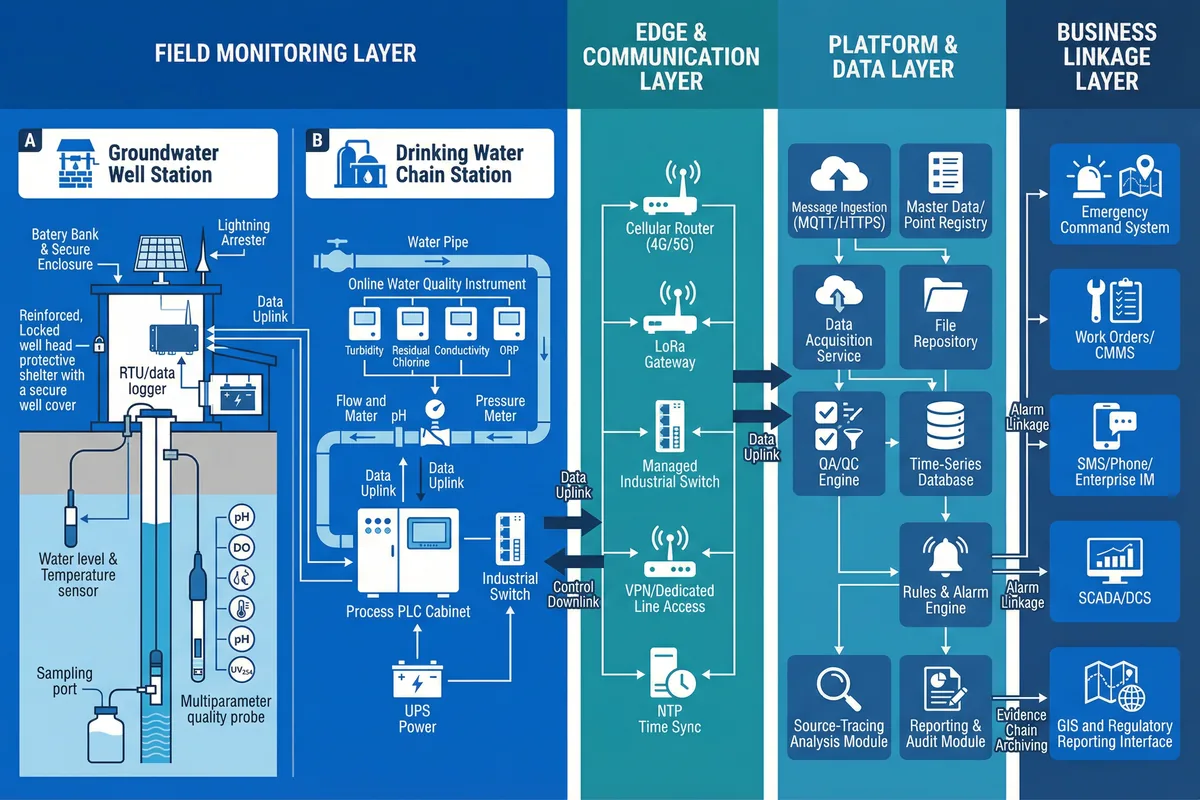
Figure 0.1: Overall System Architecture — Four-Layer Horizontal Flow from Field Monitoring to Business Linkage
The Field Monitoring Layer encompasses all sensing and local buffering equipment at groundwater well stations and drinking-water chain nodes. The Edge & Communication Layer provides secure transport, protocol adaptation, resilience, and time synchronization. The Platform & Data Layer handles QA/QC, storage, alarms, analytics, and audit functions. The Business Linkage Layer connects to emergency response, maintenance workflows, and compliance reporting systems.
3. Main Functions
The system delivers eight critical functional capabilities organized into a comprehensive nine-function framework. Each function addresses a specific operational need, from initial asset registration through ongoing O&M management. The framework ensures that no critical capability is overlooked during system design and acceptance testing.
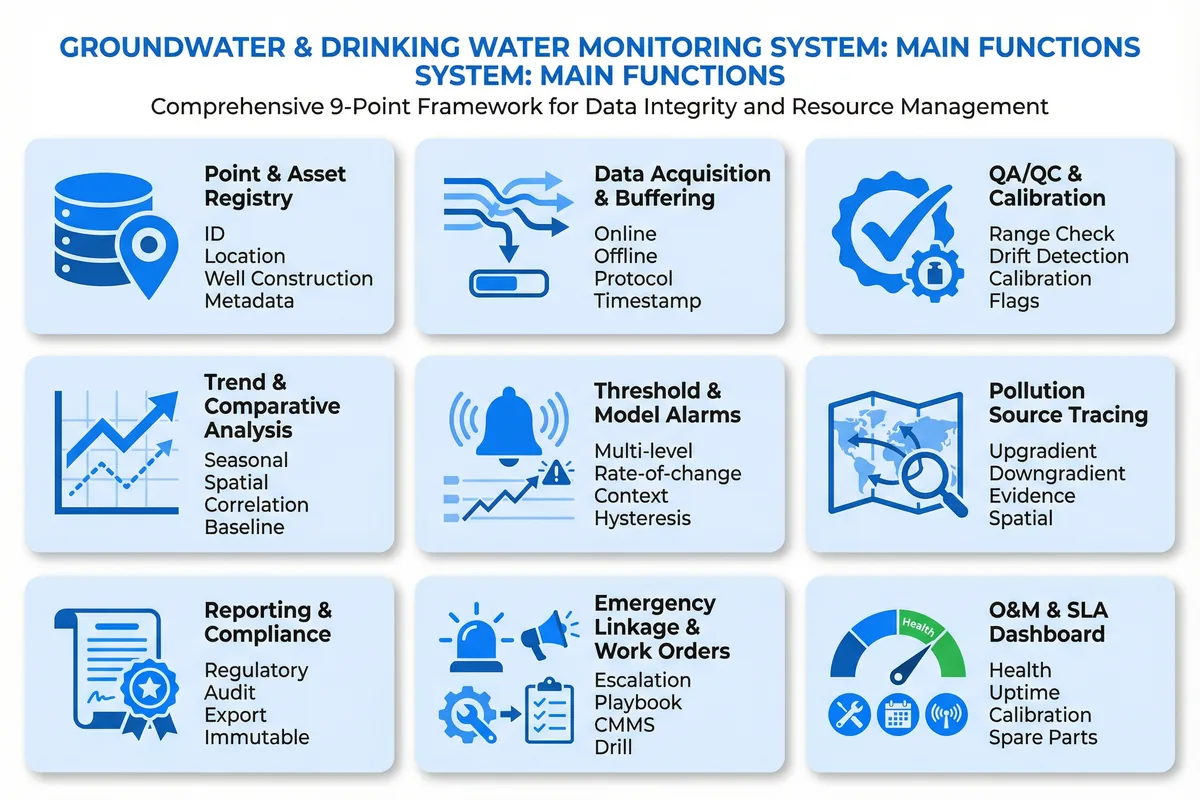
Figure 0.2: Main Functions Overview — Nine-Function Framework for Complete Monitoring System Coverage
The Point & Asset Registry maintains unique IDs, location data, well construction records, and process node metadata with strict change control. Hybrid Acquisition combines online sensor streams with laboratory sampling records, ensuring timestamp alignment and chain-of-custody integrity. The QA/QC Engine applies range checks, drift detection, and calibration enforcement, with all flagged data fully traceable. Multi-Level Early Warning uses thresholds, rate-of-change rules, and contextual logic (rainfall, pump status) to minimize false alarms while ensuring rapid detection. Incident Linkage & Response provides closed-loop alarm escalation through emergency playbooks and work orders. Audit & Compliance Reporting maintains immutable logs with configurable retention and exportable evidence packages.
4. Chapter Navigation
This guide is organized into twelve chapters, each addressing a specific aspect of groundwater and drinking water monitoring system design, implementation, and operation. Navigate directly to any chapter using the cards below or the sidebar navigation.